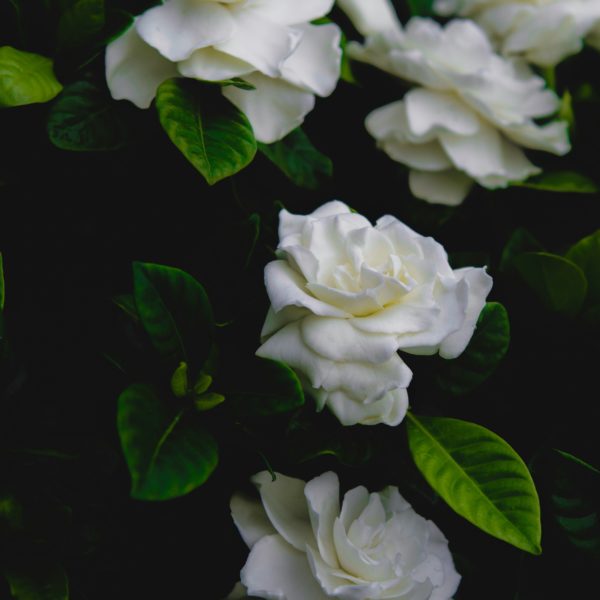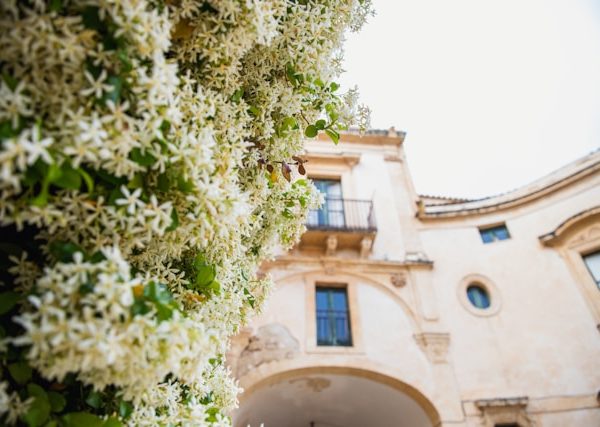
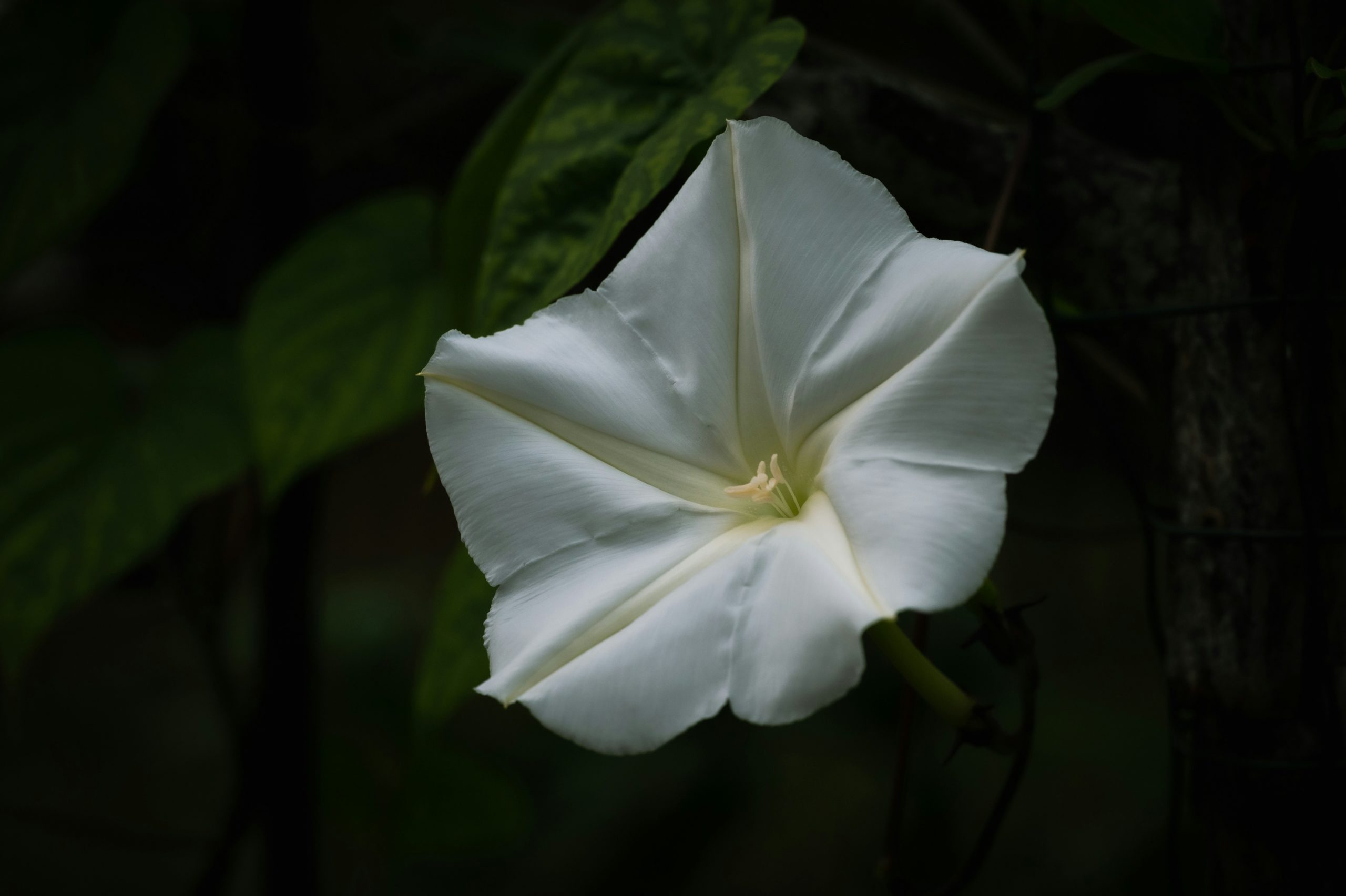
Moonflowers awaken only after dusk, their ivory petals unfurling in the hush between worlds. While the rest of the garden sleeps, they rise beneath the moon’s quiet gaze, glowing softly like secrets kept by the stars. I have been thinking about that lately, how some things bloom only in the dark.
As October slips gently into November, the nights feel longer, fuller, and more intimate. The days still ask for productivity and performance. Yet, the evenings invite something deeper. They ask for stillness, for reflection, for the kind of presence that arrives only when the noise fades and the shadows stretch across the room.
The moonflowers remind me that growth does not always happen in sunlight. Instead, it often unfolds quietly, beneath the surface, during the dark seasons when everything seems to be sleeping. Their beauty feels like a kind of defiance, a soft refusal to let darkness mean emptiness. I think of that each time I light a candle or step outside to breathe the cool night air.
There is a strange comfort in knowing that something can bloom without anyone watching. And even more, that something so delicate can find the courage to open in the breath of night. Because of that, I am learning to trust my own unfolding — to let it happen in its own time, in its own quiet way.
Now the year is winding down, and yet, in this stillness, I sense the beginning of something. A soft stirring. A promise whispered through the petals of a flower that only knows the language of the moon.
The Lore of Moonflowers
Moonflowers, with their luminous white petals and sweet nocturnal scent, have long been seen as flowers of mystery and magic. Because they bloom only at night and close with the first light of morning, they have become symbols of secret love, intuition, and transformation. Under the moon’s soft glow, they remind us that beauty often reveals itself in quiet hours, beyond the gaze of the sun.
In folklore, moonflowers were said to be born from moonbeams and blessed by lunar deities. They carry protective and purifying energy, and some Native American traditions honor them as sacred plants used to invite spiritual clarity and guidance. During the Victorian era, they symbolized fleeting beauty and the tender transience of life’s most luminous moments.
To plant a moonflower is to welcome magic into the garden. Each bloom opens like a small miracle, teaching us that even in darkness, the soul can unfurl — luminous, unhurried, and unafraid.